
7 Dec 2025
- 0 Comments
Truth doesn’t shout. It whispers-sometimes in the quietest corners of a data stream, sometimes buried under layers of curated images, algorithmically amplified noise, and carefully placed distractions. We’ve all been there: scrolling through headlines that feel urgent, watching videos that stir emotion, clicking on claims that promise answers. But what’s real? What’s just a mountain built from a molehill of half-truths? And why does it feel like the bigger the story, the smaller the facts behind it?
Take escortz paris-a term that pops up in search results alongside glamour, luxury, and mystery. On the surface, it sounds like a service. Dig deeper, and you find it’s often a placeholder for something else: a marketing hook, a distraction, a way to monetize curiosity. It’s not the truth itself. It’s the shadow cast by the truth. And that shadow is everywhere.
When the Mountain Is Just a Pile of Sand
Every year, millions of people believe things that are demonstrably false-not because they’re gullible, but because the false things were presented with more energy, more emotion, and more repetition than the truth. A single viral clip of a protest can be labeled as "riots" by one outlet and "peaceful assembly" by another. Both can’t be right. But both can be shared. The mountain of outrage grows from a molehill of edited footage.
It’s not new. In 1938, Orson Welles’ radio broadcast of "The War of the Worlds" caused panic because listeners didn’t know how to verify the source. Today, we have more tools than ever-but we use them less. We trust algorithms over our own skepticism. We scroll past fact-checks because they’re slow. We click on headlines that match our feelings, not our facts.
The Anatomy of a Molehill
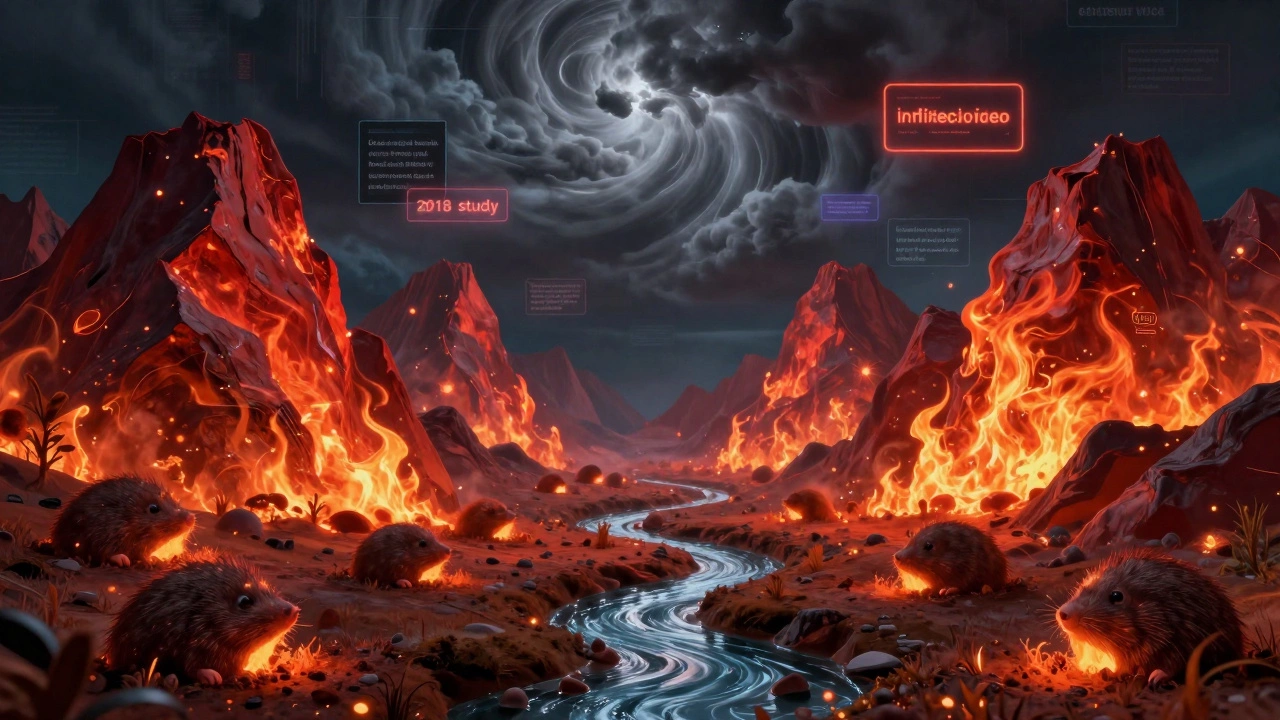
A molehill of truth is usually something small, real, and easily twisted. A photo of a person in a specific location. A quote taken out of context. A statistic from a 2018 study repurposed as a 2025 trend. These aren’t lies. They’re fragments. And fragments, when rearranged, become fiction.
Consider the rise of "influencer journalism." Someone posts a video saying, "I tried this diet and lost 20 pounds in 2 weeks." The video gets 2 million views. The diet isn’t proven. The weight loss might be water. But the story becomes a movement. The molehill becomes a mountain. And now, people are buying supplements based on a 30-second clip.
There’s no conspiracy here. Just human psychology. We’re wired to believe stories more than data. We remember emotions more than evidence. And when someone gives us a simple answer to a complex problem, we don’t ask for the fine print-we thank them.
How to Spot the Difference
You don’t need a degree in media studies to tell truth from theater. Here’s how to start:
- Check the source-not just the name, but the track record. Who funds it? What’s their agenda?
- Look for the original-if a claim cites a study, find the study. Most viral claims never actually link to it.
- Wait 24 hours-if it’s breaking news, wait. Real stories evolve. Fake ones stay the same.
- Ask "Who benefits?"-if a post makes you angry or excited, ask who gains from that reaction.
- Compare multiple outlets-not just different sides, but different types. A local paper, a national wire, an international reporter.
These aren’t tricks. They’re habits. And habits take time. But they’re the only armor we have against the constant flood of distortion.
The Role of Emotion in Distortion
Truth is boring. It’s messy. It says, "We don’t know yet." It requires patience. False narratives, on the other hand, are clean. They blame someone. They promise a fix. They make you feel like you’re part of the solution.
That’s why "escorting paris" sounds more intriguing than "legal regulations for adult services in France." One triggers curiosity. The other triggers paperwork. One sells clicks. The other sells compliance.
And that’s not just true for adult services. It’s true for politics, health, finance, even climate change. The most emotionally charged version wins-even if it’s the least accurate.
When you feel your pulse rise while reading something online, pause. That’s not your intuition speaking. That’s your amygdala being hijacked.
The Algorithm Doesn’t Care About Truth
Platforms don’t choose what’s true. They choose what keeps you scrolling. Engagement is the only metric that matters. A post that makes you angry gets shared more than one that makes you think. A video that shocks gets watched longer than one that informs.
So the algorithm doesn’t amplify truth. It amplifies reaction. And reaction doesn’t require accuracy. It just requires volume.
This is why you see the same false claim repeated across dozens of accounts. It’s not a grassroots movement. It’s a content farm. One team, one script, ten thousand variations. And each one is designed to slip past your guard.
Even "escort girl patis"-a phrase that sounds like a local detail, maybe a name, maybe a place-isn’t about geography. It’s about search volume. Someone typed it. Someone monetized it. And now it’s floating in the digital ether, waiting to be mistaken for something real.

What You Can Do Right Now
You can’t control the algorithm. But you can control your attention.
- Turn off autoplay on videos. It’s the biggest driver of accidental exposure to false content.
- Unfollow accounts that make you feel worse after you scroll. Your feed should calm you, not agitate you.
- Bookmark one reliable fact-checking site and use it before sharing anything emotionally charged.
- Ask yourself before posting: "Would I say this to someone’s face?" If not, don’t post it.
Truth doesn’t need to go viral. It just needs to be heard by one person who’s willing to pause.
When the Mountain Crumbles
Eventually, every mountain built on a molehill collapses. The 2020 election fraud claims? Debunked. The "5G causes COVID" theory? Discredited. The "miracle cure" that saved a celebrity? Forgotten.
But the damage lingers. People lose trust-not just in institutions, but in each other. They stop believing anything. And that’s the real victory for the people who profit from confusion.
Truth doesn’t need to be loud. It just needs to be consistent. It needs to be patient. It needs people who refuse to let emotion replace evidence.
So the next time you see something that feels too perfect, too urgent, too dramatic-ask yourself: Is this a mountain? Or just a molehill dressed up to look like one?